How Do Intraoral Scanners Work? A Simple Guide for Patients

How Do Intraoral Scanners Work? A Simple Guide for Patients

Intraoral scanners are changing the way dentists care for your teeth. But how do intraoral scanners work? These digital devices help dentists create detailed 3D images of your mouth. As a result, dental visits are now faster and more comfortable. In this guide, you will learn what intraoral scanners are, how they work, and why they matter in modern dental care.

What Are Intraoral Scanners?

Intraoral scanners are small, handheld devices used by dentists. They take digital pictures inside your mouth. Instead of using messy molds, dentists now use these scanners to make a 3D model of your teeth and gums. This technology is part of digital dentistry, which uses computers to improve dental care. Many dental clinics now use intraoral scanners for crowns, bridges, and clear aligners.

How Do Intraoral Scanners Work?

Understanding how intraoral scanners work can help you feel more at ease during your visit. Here is a simple step-by-step explanation:

  • Preparation: First, the dentist makes sure your mouth is clean and dry. This helps the scanner capture clear images.
  • Scanning: Next, the dentist gently moves the scanner around your teeth and gums. The scanner uses a small camera and light to take many pictures very quickly.
  • Image Processing: Then, the scanner’s computer combines these pictures to create a 3D digital model. This model shows every detail of your teeth and mouth.
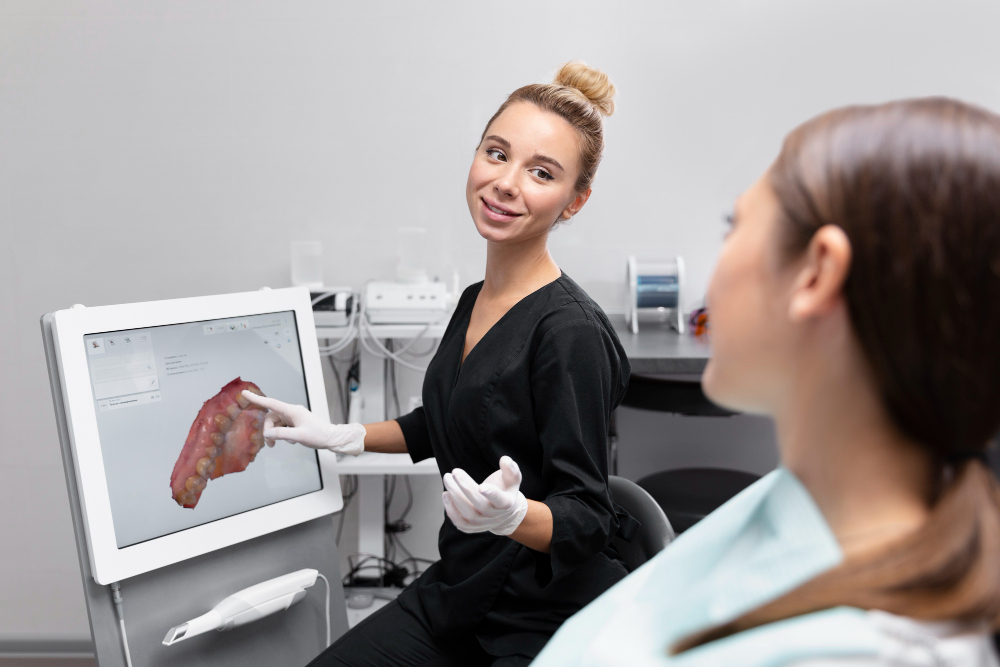
  • Review: After that, the dentist checks the 3D model on a computer screen. If needed, they can scan again to get a better image.
  • Use in Treatment: Finally, the digital model helps the dentist plan your treatment. For example, it can be used to design crowns, bridges, or clear aligners.
  • Because the process is quick and comfortable, many patients prefer digital scans over traditional molds.

    Benefits of Intraoral Scanners

    Intraoral scanners offer many advantages in dental technology. Here are some key benefits:

  • Comfort: You do not need to bite into sticky molds. Scanning is gentle and easy.
  • Speed: Digital scans take only a few minutes. This saves time for both you and your dentist.
  • Accuracy: 3D images are very detailed. This helps dentists make better crowns, bridges, and aligners.
  • Better Communication: Dentists can show you the 3D model on a screen. You can see what is happening in your mouth.
  • Eco-Friendly: Digital scans reduce the need for plastic and chemicals used in traditional molds.
  • Because of these benefits, more dental clinics are switching to digital dentistry tools like intraoral scanners.

    Limitations and Considerations

    Although intraoral scanners are helpful, they do have some limits. For example, scanners may not work as well if you have a lot of metal in your mouth. Sometimes, very crowded teeth can make scanning harder. In rare cases, dentists may still need to use traditional molds. Also, not every dental office has this technology yet. However, most people find digital scans much easier than old methods.

    Frequently Asked Questions

  • Is the scan painful?
  • No, the scan is painless. The scanner is small and does not hurt your teeth or gums.
  • How long does it take?
  • Most scans take less than five minutes. However, the time may vary based on your needs.
  • Are intraoral scanners safe?
  • Yes, they use safe light and cameras. There is no radiation involved.
  • Can children use intraoral scanners?
  • Yes, children and adults can both use them. In fact, many kids prefer digital scans over molds.
  • Will my dentist show me the 3D images?
  • Often, dentists will show you the digital model. This helps you understand your treatment better.
  • In summary, intraoral scanners make dental visits easier and more accurate. They are a key part of digital dentistry. If you have questions about this technology, ask your dentist at Signature Smile Dental Care Clinic. Consult your dentist to learn more about digital dental solutions.

    Share